Parasitoids show promise against Qfly
This article has been provided by the Fresh and Secure Trade Alliance (FASTA).
Parasitoid wasps are being investigated in Victoria as a potential tool to support area-wide management of Queensland fruit fly (Qfly).
Through the FASTA, researchers are exploring how parasitoids could complement existing fruit fly management approaches and contribute to long-term suppression of Qfly populations.
Current research is focused on three key areas:
- Understanding of the persistence of parasitoids after pilot releases.
- Better understanding the factors that support parasitoid persistence.
- Understanding the potential impact of parasitoids on fruit fly populations through parasitism.
Area-wide management (AWM) aims to control pest populations across entire regions rather than at individual properties. It relies on an integrated approach in which industry, government and local communities work together to reduce fruit fly populations.
For Qfly, AWM is based on surveillance using systematic monitoring, then responding using one or more of the suppression techniques including rigorous orchard hygiene, protein baiting, male annihilation (MAT), sterile insect techniques (SIT) and parasitoid wasp releases and/or establishment.
- Systematic monitoring: Deploying a network of traps and lures across the region identifies population hotspots, measures flight activity, and directs exactly where suppression efforts should be focused. Refreshing lures in traps is important to ensure that trap counts are accurate. An agreed trapping grid and effective data-sharing arrangements are also critical to the ensure that the responsive to a surge in numbers is timely and properly located.
- Orchard hygiene: Denying flies their breeding sites at a commercial scale in orchards is an important line of defence preventing the large-scale buildup in fruit fly numbers. This includes prompt post-harvesting, collecting and destroying dropped/infested fruit, and removing abandoned host trees. While private backyard trees and fruit trees growing wild in common areas can be a source of Qfly, they are also valuable for the maintenance of biocontrol agents such as parasitoids due to the variety and seasonality of fruits.
- Protein baiting: Targets female fruit flies before they can reproduce. A mixture of protein and a toxicant is applied as a spot spray to foliage, drawing females in to feed and eliminating them.
- Male Annihilation Technique (MAT): Employs highly specific male attractants and toxicants placed in commercial and residential zones to drastically reduce the male population before they can impregnate females.
- Sterile Insect Technique (SIT): Continuously releases massive numbers of sterilized male flies into the wild. These sterile flies overwhelm the wild population, resulting in infertile eggs and progressive population collapse.
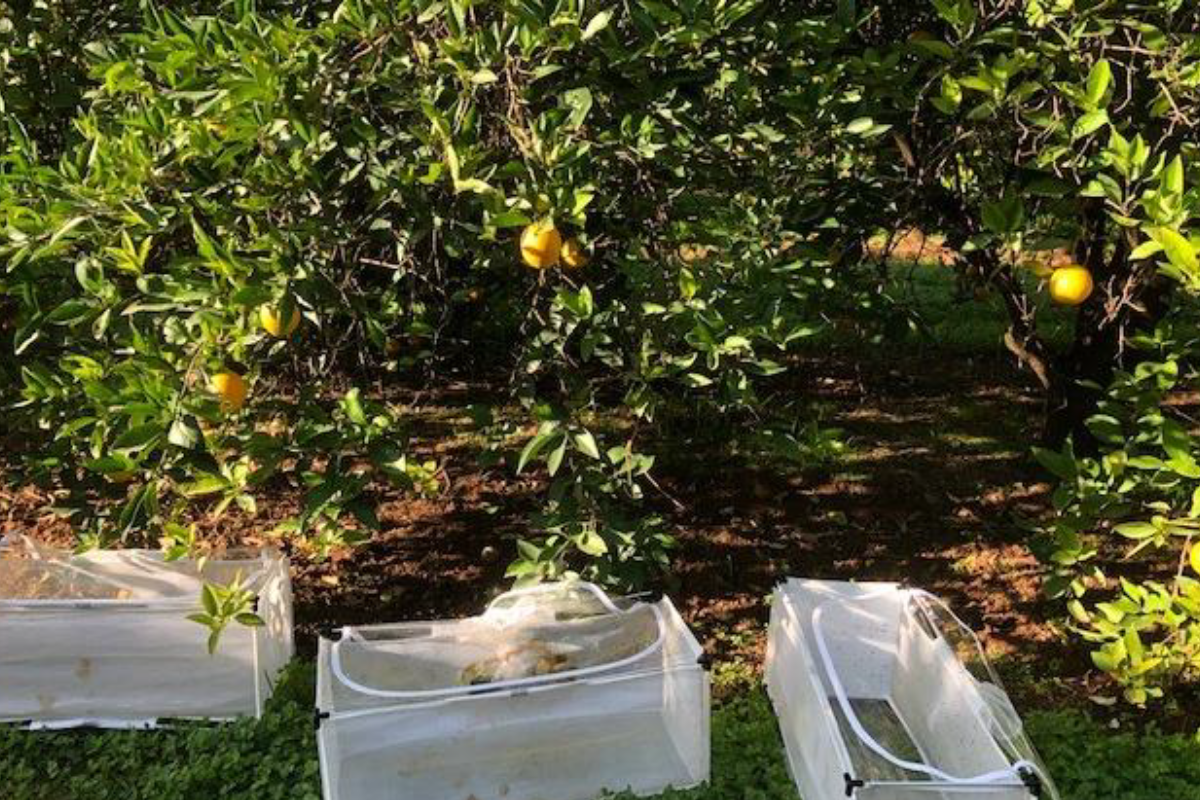
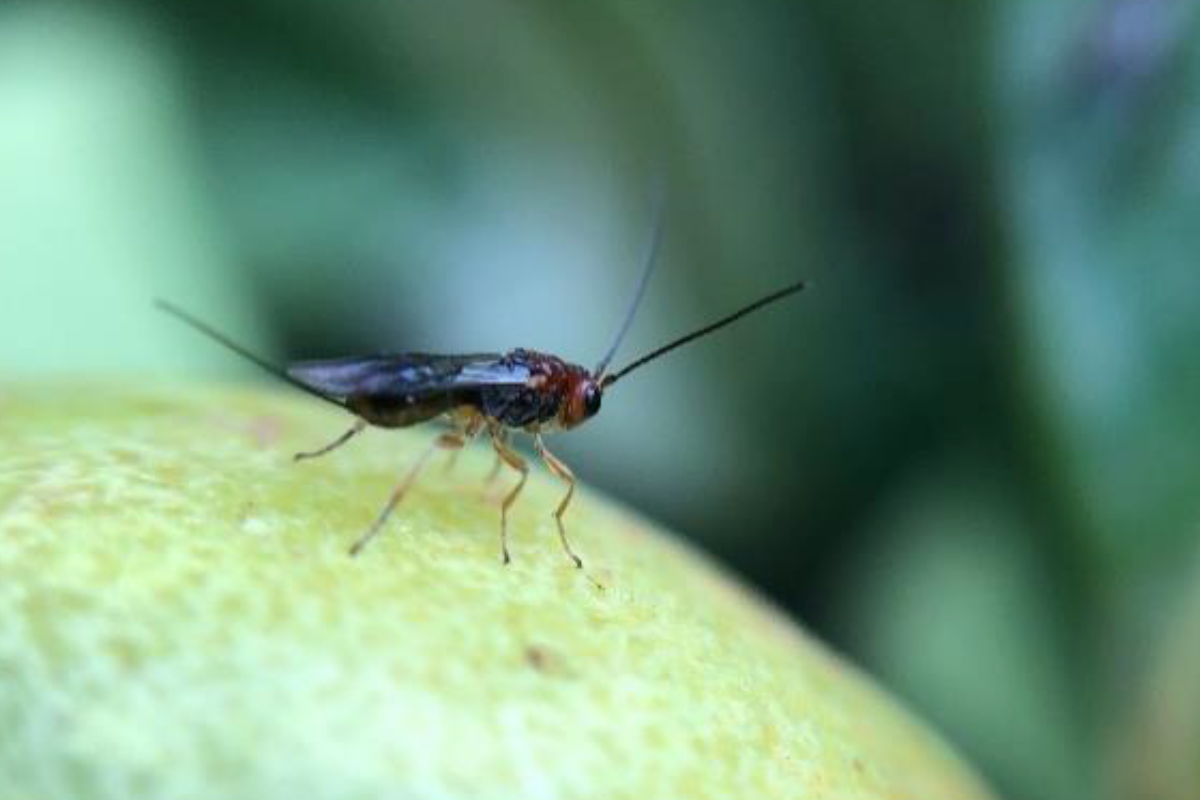
- Parasitoid wasps: The release or establishment of natural enemies of Qfly, such as parasitoids, in areas where they have been previously absent can put downward pressure on fruit fly populations, allowing other control measures that rely on low pest pressure to work effectively. Pilot releases of parasitoids have taken place in several Victorian towns in the Goulburn valley and Sunraysia since 2020. A species native to tropical and subtropical north-east Australia, Diachasmimorpha kraussii, has shown good promise as a biocontrol agent against Qfly, parasitising Qfly in the field and persisting over several seasons.
Effective AWM requires cooperation across all levels of the community, including local councils, residential gardeners, and commercial producers. Learn more about setting up a local or commercial strategy using the National Fruit Fly Council guidelines or the comprehensive ACIAR Area-Wide Management Manual.

Lucy McLay is the lead researcher on the FASTA parasitoid work, which aims to evaluate the potential for parasitoids to act as biocontrol agents against Qfly as part of AWM
Lucy explains: “Our work aims to determine whether D. kraussii can parasitise Qfly and establish under Victorian conditions where they have been previously absent. Parasitoid establishment should help make growers’ IPM approaches more effective, enhancing their productivity and market access.”
Some specific parasitoid findings from recent FASTA activities include:
- Understanding of the persistence of parasitoid wasps after pilot releases. Trial results showed that kraussii can parasitise and establish under Victorian conditions, and provide significant levels of parasitism of Qfly within the release season. Parasitism level fluctuated depending on host fruits and the time of year, with parasitism as high as 63% recorded in one monitoring event. Across all monitoring times and fruit variety, parasitism was more modest at 17%.
- A better understanding of the factors supporting parasitoid persistence. Researchers are testing whether previously unrecorded fruit hosts for kraussii can support parasitoid development. This is important for weedy species such as prickly pear which is common in Sunraysia and allows Qfly populations to increase in unmanaged areas.
The Fresh and Secure Trade Alliance is funded through Hort Innovation Frontiers with co-investment from Queensland Department of Primary Industries, Western Australia Department of Primary Industries and Regional Development, Victoria Department of Energy, Environment and Climate Action, Northern Territory Department of Agriculture and Fisheries, Department of Primary Industries and Regions South Australia, Tasmania Department of Natural Resources and Environment, Queensland University of Technology, James Cook University, Western Sydney University, Australian Blueberry Growers’ Association, GreenSkin Avocados with contributions from the Australian Government and using the strawberry and avocado research and development levies.