Biocontrol research delivers promising results for fruit fly management
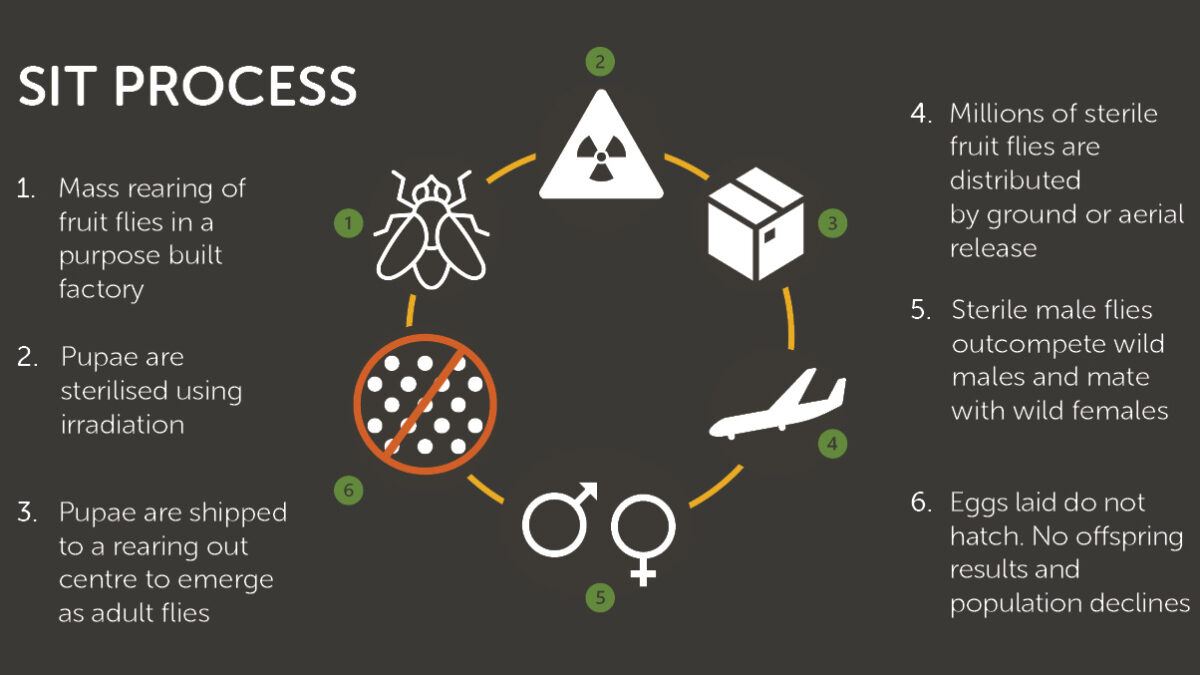
Over recent years, research into the use of the Sterile Insect Technique (SIT) as a biocontrol option has significantly advanced global capacity to manage the highly problematic pest spotted wing drosophila (SWD).
British startup BigSis has conducted trials on raspberry farms in the United Kingdom, comparing the effectiveness of SIT with traditional insecticide treatments. The results were outstanding, showing an 80 per cent reduction in larval presence in crops treated with SIT compared with conventional methods.
These findings continue to expand the global application of SIT across multiple species affecting horticultural crops. The use of biocontrol options such as SIT offers clear benefits, including reduced crop losses, lower pesticide residues in food, and viable control options where chemical resistance limits insecticide effectiveness.
“Biocontrol options such as SIT offer clear benefits, including reducing crop losses, lowering pesticide residues in food, and providing alternatives where insecticide resistance is an issue,” says Stuart Burgess, Manager, National Fruit Fly Council.
Research continues both in Australia and internationally to further refine biocontrol methods, particularly through the combined use of SIT and parasitoids for the management of fruit fly species such as Queensland fruit fly (Qfly).
Click on these links to learn more:
Queensland fruit fly analysis – Greater Shepparton City Council
Drosophila suzukii: the sterile insect will be the new strategy
New research on the SIT method to combat Drosophila suzukii advances